Insights | April 9, 2026
How Brands Activate at Music Festivals (And What Actually Works)
Music festivals are crowded. Not just with people, but with brands.
Walk through any major festival and you’ll see the usual signs of presence everywhere. Logos on stages. Branded tents. Free merch. Sponsored lounges. Tons of brands are technically “there.” Far fewer are offering something people will actually remember.
At G7, we think about festival brand activations as more than a branded footprint. The goal isn’t just to occupy space. It’s to bring something real about the brand to life in a way that fits the environment, gives people a reason to engage, and leaves a stronger impression than visibility alone.
What “Brand Activation at a Music Festival” Actually Means
The clue is in the word itself. An activation should bring to life, or activate, something real from inside the brand.
That starts with a clear point of view on what, exactly, is being activated. Sometimes that is a product truth people can experience firsthand. Sometimes it is a behavior the brand is known for. Sometimes it is a role the brand already plays in culture.
The strongest work begins there.
From that foundation, the brand activation becomes more than something people pass on their way to the next stage. It becomes a moment they choose to step into. It gives them something to do, something to feel, or something to discover.
When it works, people leave with a clearer sense of the brand because they interacted with it in a meaningful way.
Why Most Festival Activations Fall Flat
Most of the time, the problem isn’t lack of effort or lack of budget. It’s lack of clarity.
Too many brands skip past the harder strategic question and move straight to tactics. What is the footprint? What are we giving away? How do we get a line? How do we make sure the logo is visible?
That approach can create activity, but it rarely creates real connection.
Without a strong idea underneath it, the work tends to become interchangeable. Lounges blur together. Installations look impressive from a distance but give people very little to do once they arrive. Giveaways attract attention for a moment, then disappear into the noise. Everything feels active, but not much actually lands.
The issue is usually not that these elements are wrong on their own. It is that they end up carrying the entire experience, because there is no stronger idea holding it together.
What Actually Works
The brands that stand out tend to build from something more specific and more true.
They identify what is unique about the brand and put that on display in a way people can experience, not just observe. If the product has a meaningful point of difference, a festival brand activation can make that tangible. If the brand has a genuine connection to music, community, or another cultural space, the experience can express that in a way that feels earned rather than decorative.
That foundation shapes everything that follows. It influences what people are invited to do, how the space is designed, and why the experience belongs at that festival in the first place.
The best festival brand activations also understand the environment they are stepping into. Festivals already have their own rhythm, energy, and visual language. Strong work doesn’t ignore that. It works with it, so the experience feels like part of the festival rather than an interruption.
And just as important, it gives people a reason to participate. Not a gimmick, and not busywork. Something genuinely engaging. Something that rewards curiosity. Something that feels worth their time.
In our experience, that is the real dividing line. The most effective festival activations aren’t just seen. They are used. Explored. Shared. Talked about afterward.
Over time, the strongest brands take this a step further and turn that thinking into a platform. Rather than reinventing themselves at every event, they develop an ownable approach that can travel from festival to festival while still adapting to the setting. That kind of consistency builds recognition over time and makes the investment work harder.
When all of that is aligned, content tends to come naturally. People capture experiences they are already enjoying. They post what feels memorable, not what has been forced in front of them. That is when the activation starts extending beyond the footprint itself.
Where G7 Comes In
At G7, we don’t start with structures, giveaways, or placements. We start with a sharper question: what is true about this brand, and how do we bring that to life here?
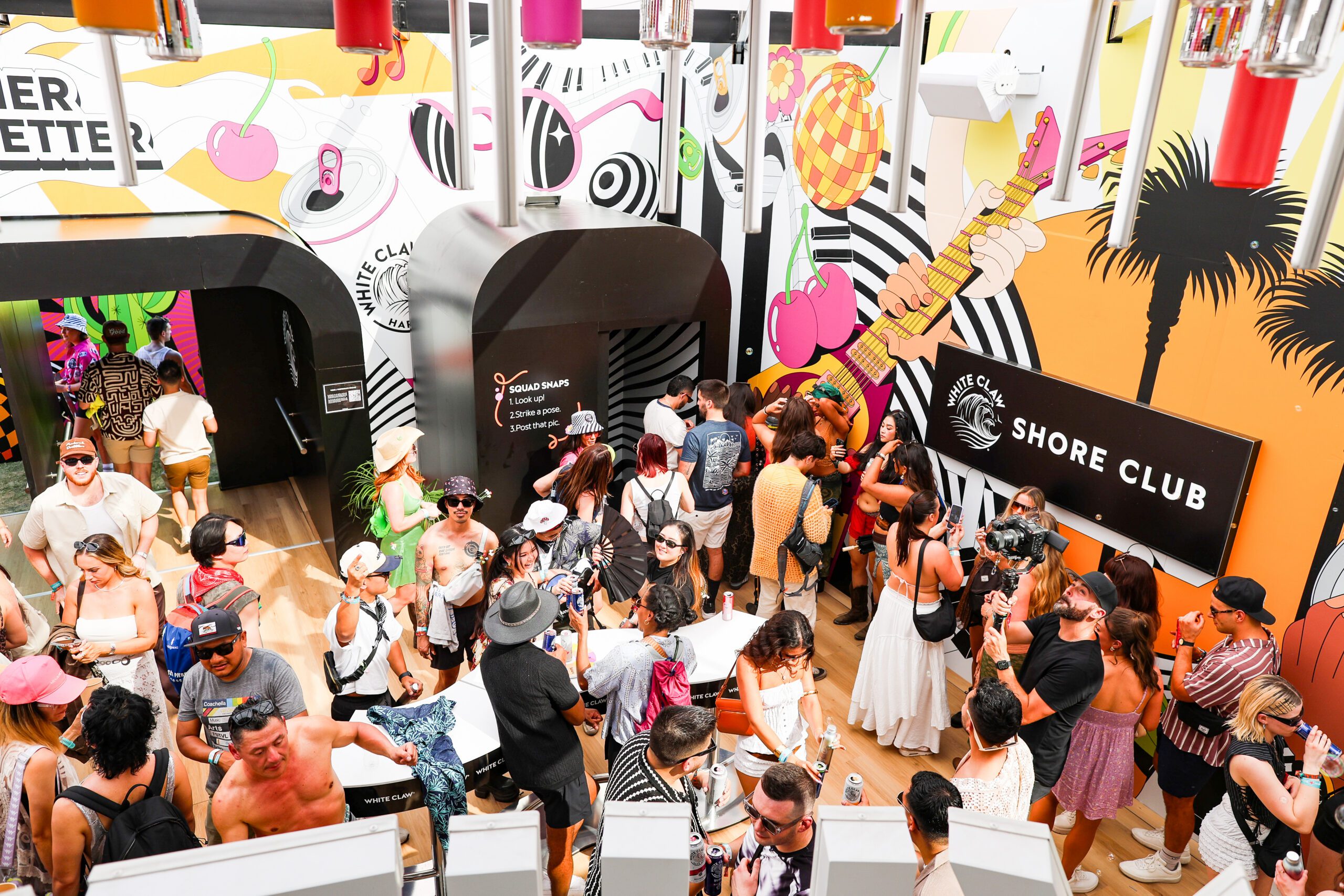
From there, the work gets more precise. How people move through the space. What draws them in. What makes them stay. What they walk away with. We brought that thinking to the White Claw activation at Coachella, and here’s what it looked like.
That’s the difference between building a temporary installation and creating an experience people actually want to be part of.
A lot of brands can show up at a festival. The harder part is creating something that feels native to the moment, clearly connected to the brand, and strong enough to leave an impression once the weekend is over. That’s the standard we believe in.