Insights | November 19, 2026
How to Book a Keynote Speaker
To book a keynote speaker, start with what the speaker needs to achieve for your audience. Consider the formats your event can accommodate and the budget you have available, then build a shortlist around that brief. From there, work through the offer, contract and preparation that will help them deliver.
A recognizable name can get people interested. Relevant ideas, engaging delivery and a clear connection to your event’s purpose can make a session worth attending, whether the speaker is a household name or a new discovery for your audience.
Here’s how to work through those decisions, from audience fit to speaker fees and recording rights. For the wider process across speakers, musicians and other talent, see How to Book Talent for a Corporate Event.
Key takeaways
- Define the audience and desired outcome before discussing names.
- Choose a format that fits the speaker’s strengths and your audience’s needs.
- Budget for the full appearance, including travel, production and content rights.
- Evaluate speakers on relevance, delivery and availability.
- Be clear about what you’re booking, then give the speaker the preparation and support to deliver.
1. Define what the speaker
needs to do
Write a short speaker brief that connects your event’s goals to what the audience needs. “Inspire the room” is a starting point, but it won’t tell you how to choose a keynote speaker.
A sales kickoff might call for someone who can speak to resilience for a team rebounding from a tough year. A user conference might need an expert who can explain an emerging trend and its implications for the industry.
Before discussing names, answer four questions:
- Who’s in the room? Consider their roles, experience and current challenges.
- What should they leave with? A new perspective, practical advice, renewed confidence or a clearer sense of direction?
- What message should the speaker support? Connect the appearance to the event’s purpose and make sure the session reinforces its theme.
- Where does the session sit in the agenda? Opening the day, speaking just before the CEO’s keynote and closing the conference each create different expectations.
Use those answers to consider the names your team brings to the table. They’ll help you explain why someone belongs on the shortlist and give whoever you book a clearer brief to work from.
2. Consider the format
before the name
Know which formats could work for your event before approaching speakers. That helps you assess who’s right for the role, what they’ll prepare and the support they’ll need.
| Format | Best for | What you’ll need to plan |
| Keynote presentation | Exploring a focused idea or framing an event theme | A clear brief, agreed length and technical requirements |
| Keynote with audience Q&A | Combining a focused talk with questions relevant to the room | Time for both, a way to collect questions and someone to manage them |
| Interview or fireside chat | Drawing out stories and perspectives through conversation | A prepared interviewer, agreed topics and suitable staging |
| Hosted program | Connecting sessions and keeping the program moving | An emcee, run of show, scripts and timing cues |
| Panel discussion | Bringing several perspectives into a useful discussion | A moderator, panelist preparation and clear discussion priorities |
If you’re booking a motivational speaker, consider which formats your event can accommodate. Some speakers with the most compelling stories don’t offer a prepared keynote and can only be booked in an interview format. Being open to a fireside chat could help you secure the best person for your audience and theme.
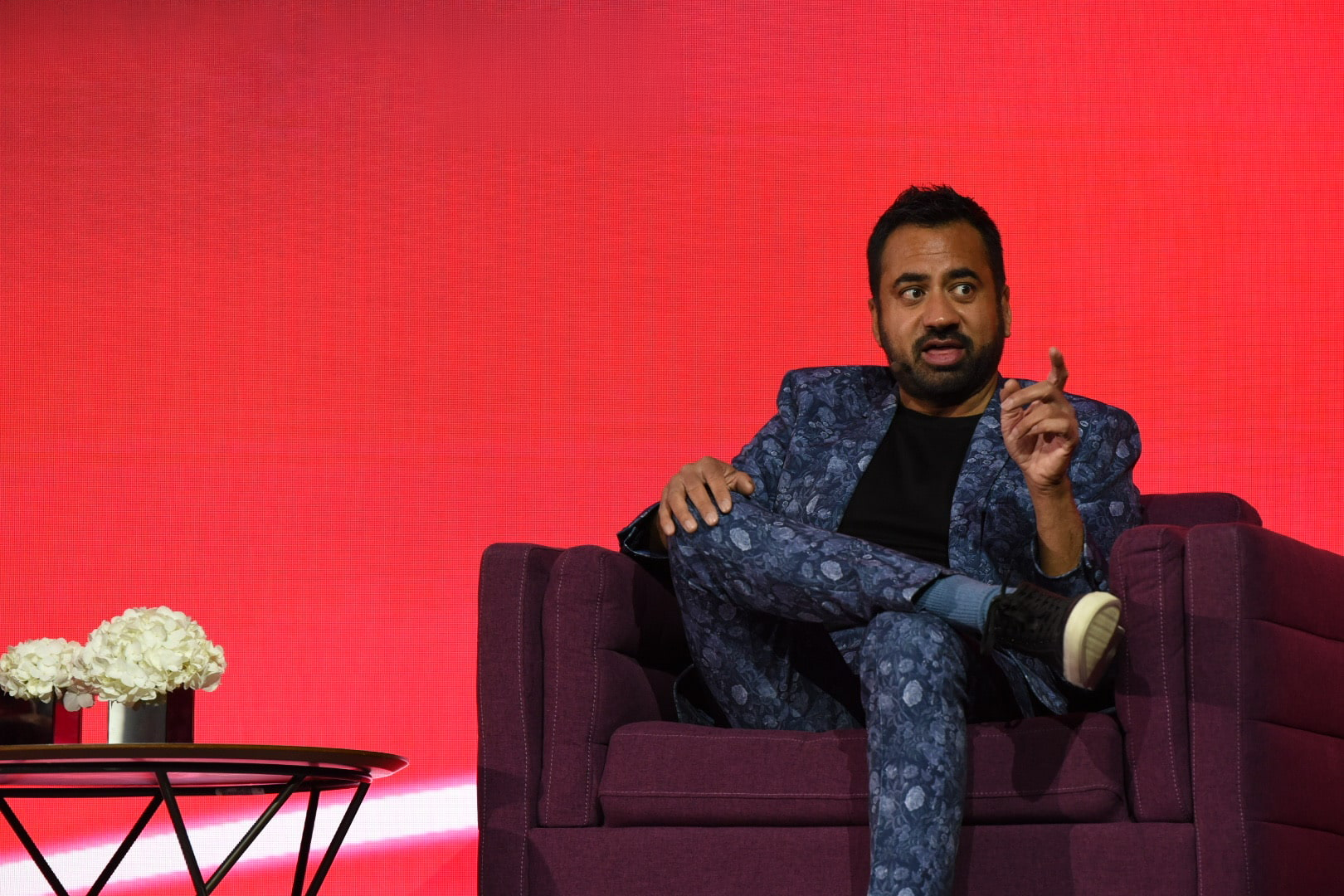
For Virgin Pulse’s Thrive Summit, G7 booked actor, writer and producer Kal Penn for a featured keynote delivered as a fireside chat. The conversation drew on his experience in entertainment and government at a conference focused on workplace wellbeing.
3. Set a realistic budget
Set a total budget for the speaker’s appearance before building your shortlist. Keynote speaker fees are the starting point, and what’s included can vary from one quote to the next.
Depending on the agreement, you may also need to cover:
- Travel and hospitality: Airfare, hotel, ground transportation and requirements in the speaker’s rider. Confirm early whether private air travel is required, since it can add significantly to the cost.
- Production: Staging, audio, lighting and presentation support.
- Marketing: Permission to feature the speaker in event promotion, including where, how and how often their name or image will appear.
- Content rights: Permission to livestream, record or reuse the appearance.
- Additional activities: A VIP reception, meet-and-greet, photo session or other time beyond the main program.
- Booking support: Fees for negotiation, coordination and on-site management, where applicable.
Ask for a breakdown so you can compare the full cost of each option. Share your priorities with your booking partner, too. If the keynote is essential but the reception is flexible, they can shape the offer around what matters most to your event.
4. How to find a keynote speaker: build a shortlist
Build a shortlist of speakers who fit your audience, message, format and budget, checking availability and fees early. Speaker websites, bureau directories, recommendations and past conference programs can help you find candidates. An independent booking partner can help you develop and assess the options.
Watch a full talk or interview where possible. A highlight reel shows someone’s best moments; a longer recording gives you a feel for how they develop ideas, handle questions and hold the room.
As you compare options, ask:
- Relevant experience: What gives them credibility on the subject you want to explore?
- Audience connection: Have they delivered successfully for people with similar roles, interests or challenges?
- Format fit: Are they strong in the presentation, interview or hosting role you’re considering?
- Preparation: Are they willing to tailor the session, and what does that include?
- Brand fit: Are there public statements, affiliations or competing partnerships you should consider?
Keep alternatives in play until your preferred speaker is confirmed. Availability and fees can change, and internal approval of a name doesn’t secure the booking.
G7’s keynote speaker and host booking team evaluates options across the market. We don’t represent talent or work from a fixed roster, so recommendations start with what fits your event.
5. Make the offer and agree on the speaker terms
Confirm availability, then put a formal offer in writing with the event date, location, audience, format, duration, fee and travel terms. Include everything you’re asking the speaker to do, from the preparation call to the last photo.
Agree on these details before signing so the appearance you’re planning matches the one you’ve booked.
| Speaker term | What to agree on | Why it matters |
| Presentation and Q&A | Session length, topics and time for audience questions | Keeps the talk and audience questions within the agreed session time |
| Recording and content rights | Livestreaming, replay access, edited clips, channels and usage period | Permission to record doesn’t automatically include permission to publish or reuse |
| Meet-and-greets and photos | Duration, guest count and format | Additional activities require time beyond the main session |
| Promotional support | Use of the speaker’s name, image and biography; any requested social posts | Event promotion and posts from the speaker are separate commitments |
| Content preparation | Briefing calls, customization, slides and any agreed review process | Sets expectations for tailoring the session and reviewing materials |
| Exclusivity | Any restrictions involving competitors, timing or geography | Restrictions can affect the speaker’s willingness to accept and the fee |
For more on contracting, cancellation, travel and rider requirements, see our guide to talent booking agreements. Before announcing your speaker, make sure the agreement is confirmed and you have the promotional approvals you need.
6. Prepare the speaker And
run the day
Brief the speaker on who’s in the room and what you want them to take away. A preparation call gives you time to share the context behind the event and discuss how their material can connect with your audience.
Before the event, work through:
- Audience: Their roles, experience and current challenges, including anything the speaker wouldn’t know from a company overview.
- Agenda: The event theme, where the session sits and what people will have heard before the speaker takes the stage.
- Content: The topics to explore, sensitive subjects and any boundaries agreed on during booking.
- Presentation: Slides, video, microphones and time to check the setup with the production team.
- Session flow: The introduction, timing cues, interviewer or moderator preparation, and how audience questions will be handled.
- Content capture: What can be recorded, who’s capturing it and how the approved footage will be used.
On the day, give the speaker one clear point of contact who knows the schedule and what’s been agreed on. Our broader guide covers advancing and on-site talent management.
Afterward, measure the appearance against the goal you started with. Audience feedback can tell you what stayed with people, whether the advice felt relevant and what they plan to use.
How much does it cost to book a keynote speaker?
Keynote speaker fees vary with the speaker’s recognition and demand, the event date and location, and what the appearance includes. A household name from sports or entertainment can command a six-figure speaking fee. Excellent speakers at significantly lower rates can be just as charismatic and impactful for your audience.
A wellness expert helping employees manage stress, an author exploring leadership or an athlete sharing lessons from competition may bring exactly what your event needs. Consider how much the booking depends on name recognition. It can help drive conference registrations, while expertise and delivery may carry more weight for a session focused on employee development.
The scope of the appearance also shapes the price. A keynote followed by a VIP reception and photo session is a different commitment from the talk alone. Livestreaming, employee replay access, social clips and use of the speaker’s image in event promotion may involve additional fees. Travel, preparation and any requested exclusivity can affect the total, too.
Share your audience, goals and available budget, even if you’re unsure what it can cover. A booking partner can help you explore options and explain what each speaker could bring to the event. Request a quote for the full appearance, with a clear breakdown of what’s included.
Bureau, independent partner or direct: which route is right?
Choose a booking route based on the guidance and support your team needs. You might need help securing a particular speaker or developing recommendations from your event brief.
| Route | When it can work well | What to clarify |
| Speakers bureau or talent representative | You want help exploring speakers or securing someone you already have in mind | Who they represent, how broadly they search and what support is included |
| Independent booking partner | You want someone to recommend options and manage the booking on your behalf | How they charge and who handles contracts, preparation and show-day support |
| Direct booking | You’ve found a speaker who accepts direct inquiries, and your team can manage the booking | What their team handles and what your team will need to arrange |
Speakers bureaus don’t all work the same way. Some represent speakers exclusively; others work for buyers. Ask whose interests they represent and how that shapes the options they recommend.
G7’s corporate talent booking team works on your behalf. We don’t represent talent, so we evaluate options across the market based on your event’s needs.
Common mistakes to avoid
- Choosing a name before defining the role. Establish the theme first, then consider speakers who can enhance it. If the connection isn’t clear to you, your audience won’t get it either.
- Relying on a single option. A speaker’s availability can change without warning. Keep backup options in mind so you’re not starting from scratch if your first choice falls through.
- Budgeting only for the speaking fee. Check travel, production, content rights and any extras before committing.
- Assuming recording includes reuse rights. Agree on where you can share the content, who can access it and for how long.
- Leaving outreach too late. Start once your date and brief are clear, with time to explore alternatives if your first choice isn’t available.
- Skipping the preparation call. Even an experienced speaker needs to know what’s happening in your business and what your audience is coming to hear.
- Leaving show-day ownership unclear. Name a point of contact who knows the agreement, schedule and speaker’s needs.
FAQs
How much does it cost to book a keynote speaker?
Fees vary with the speaker’s recognition and demand, the date, format and scope of the appearance. Major celebrity names can command six figures, while strong speakers are available at significantly lower rates. Request a quote that accounts for travel, additional activities and any recording or promotional rights.
How far in advance should you book a keynote speaker?
Start once your date, audience, goals and budget are clear. Allow several months where possible for in-demand speakers, especially during busy conference periods. Earlier outreach gives you more options and time to agree on preparation, promotional use and recording rights. If your timeline is shorter, ask what’s available.
How do I find a speaker for my event?
Start with your audience and goals, then look for speakers with relevant experience and strong delivery in your chosen format. Review full talks or interviews, check availability and compare total costs. A bureau or independent booking partner can help you develop a viable shortlist.
What’s the difference between a speakers bureau and an independent booking partner?
Some speakers bureaus represent talent; others work for buyers. G7 is an independent booking partner that doesn’t represent speakers and advises on the client’s behalf. Ask any prospective partner who they represent, how they select recommendations and what support they provide.
How do you choose between a keynote speaker and a host?
A keynote speaker delivers a focused session built around a message or theme. A host or emcee connects the wider program through introductions, transitions and audience engagement. Many events need both, and the strongest person for one role may be different from the strongest person for the other.
Can you book a celebrity as a keynote speaker?
Yes. Actors, athletes and other cultural figures can bring relevant experience to a keynote or fireside chat. Review their speaking footage and choose a format that draws on what they can contribute to your audience, alongside their name recognition.
Find the right speaker for your event
A strong speaker booking starts with a clear purpose and follows through on the details that help the appearance succeed. Choose someone who fits your audience, agree on the full scope and give them the preparation and support to deliver.
G7’s talent team includes past International Entertainment Buyers Association Corporate Buyer of the Year winners. We help clients find the right speaker and manage the booking through show day. If you’re planning an event, let’s talk about the right speaker or host for your audience.