Insights | July 29, 2026
What Is A Brand Activation? Definition, Strategy & How It Works
Brand activations are a marketing strategy that turn passive brand awareness into active consumer participation. Instead of simply telling people what a brand stands for, activations give them a direct way to experience it, try it, respond to it, share it, or join in.
That’s increasingly valuable in a world where attention has become one of the hardest things for brands to earn. Consumers are exposed to thousands of marketing messages a day, and most are easy to skip, scroll past, ignore, or forget. Awareness still matters, but recognition alone doesn’t create connection.
Brand activations are one answer to that problem. It shifts the brand from broadcasting a message to creating a moment people can participate in.
That moment can take many forms: a live experience, festival activation, sponsorship program, pop-up, retail moment, sampling tour, sweepstakes, contest, digital campaign, talent partnership, or entertainment-driven platform. The format changes based on the goal, audience, and context. The purpose stays the same: give people a real reason to engage with the brand.
Key Takeaways
- Brand activations turn passive awareness into active participation by giving people something to do with a brand.
- Experiential marketing is one type of brand activation, but they can also include digital campaigns, sampling, retail moments, sponsorships, sweepstakes, talent partnerships, and other participation-driven formats.
- The strongest activations start with a clear business goal, a defined audience behavior, and a format that makes participation feel natural.
What Is A Brand Activation?
A brand activation is the process of bringing a brand to life through experiences, interactions, campaigns, or programs that invite audience participation. It moves people from passive awareness toward action, trial, affinity, sharing, purchase intent, or loyalty.
In simple terms, brand activations are where a brand idea becomes something people can do.
A traditional ad broadcasts a message. A brand activation invites people into the idea behind it. That could mean sampling a product, entering a contest, attending a branded event, visiting a pop-up, sharing content, unlocking a reward, taking part in a challenge, or engaging with talent tied to the campaign.
In some marketing conversations, “brand activation” is used narrowly to describe on-site tactics like pop-ups, sampling, stunts, retail events, street teams, or festival footprints. Those formats are part of brand activation, but they aren’t the whole discipline. More broadly, brand activation is the strategy of turning awareness into participation across live, digital, retail, sponsorship, sampling, or talent-led formats.
The line is worth keeping clear. If a brand creates something people can only passively watch, it may be a strong ad, film, stunt, or PR play. But it’s still ultimately a one-way campaign. Brand activations go further by giving the audience a way to participate, respond, or act.
A strong brand activation usually answers five questions:
Who are we trying to reach?
What do we want them to do, feel, try, understand, or share?
Where are they already spending their attention?
What kind of participation would feel natural in that context?
How will we know if it worked?
Those questions separate a true activation from a branded presence. The point isn’t just to show up. The point is to create a moment that gives people a reason to engage.
Brand Activation vs. Experiential Marketing: What’s the Difference?
Brand activation is the broader marketing discipline. Experiential marketing is one major type of brand activation.
Experiential marketing uses designed experiences, usually in person, to help people engage with a brand through space, story, sensory detail, and interaction. A pop-up, festival footprint, product launch event, mobile tour, or interactive installation can sit clearly within experiential marketing when it’s built as a designed consumer experience.
Brand activations can include those experiences, but they can also take other forms. A digital contest, online sweepstakes, creator-led challenge, sponsorship platform, sampling program, or retail promotion can also be a brand activation if it gives the audience a meaningful way to participate.
In other words, experiential marketing is one way to activate a brand. It’s not the only way.
A brand might activate through a live experience that helps people physically step into the brand world. It might activate through a sponsorship by turning a logo placement into something fans can use, visit, play, share, or remember. It might activate through a digital program that asks people to enter, vote, submit, compete, or create. It might activate through sampling by making product trial easier and more rewarding.
Talent can also support brand activation, but only when it gives the audience something to do with the brand. A celebrity in an ad is still an ad. A talent-led activation gives people a reason to participate: attending a performance, entering a fan experience, joining a challenge, accessing a special moment, or engaging with the brand through the talent’s role in the campaign.
For G7, brand activations are often where multiple disciplines come together: experience design, entertainment, talent, partnerships, sponsorship, content, social amplification, digital engagement, and production. Experiential marketing is one of the most powerful ways to activate a brand, but the larger discipline is broader than any single format.
Why Brand Activation Marketing Matters More Than Ever
Brand activation marketing matters because people are more likely to remember brands they actively engage with. In a crowded marketing environment, participation can create a stronger connection than passive exposure alone.
Consumers are surrounded by messages all day. More media doesn’t automatically create more attention. More impressions don’t automatically create more meaning. A person can recognize a logo, scroll past a post, skip a video, and still feel no closer to the brand.
Activations give brands another path. They create a reason for people to stop, enter, try, play, taste, vote, share, listen, watch, submit, attend, or explore.
This is especially valuable in culture-driven marketing. The strongest activations don’t interrupt the moments people care about. They add something to them.
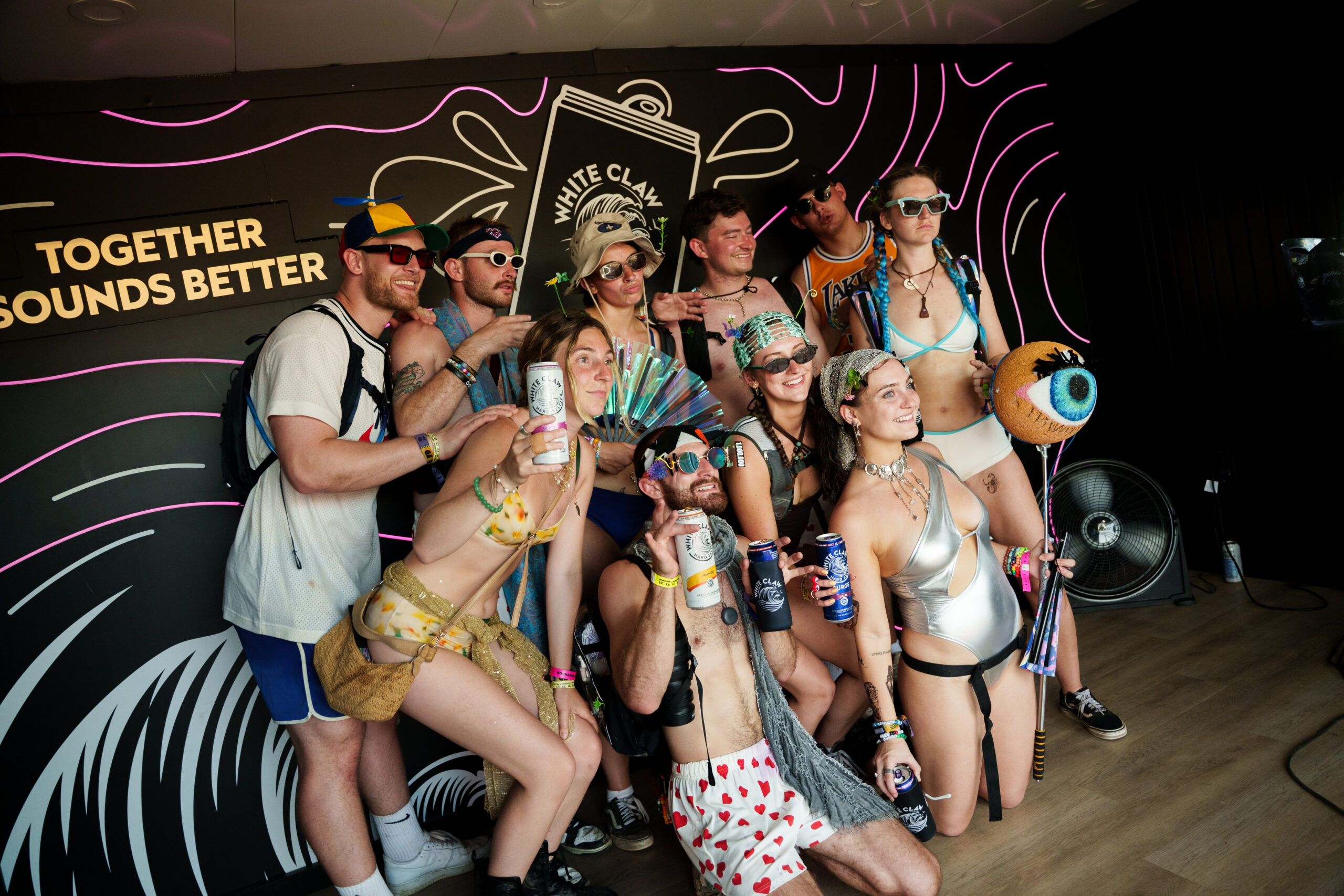
At a music festival, that might mean giving fans a better place to gather, a useful service, a surprise performance, a shareable interaction, or a product trial that fits the energy of the weekend. In a digital campaign, it might mean giving people a reason to enter a sweepstakes, vote on a campaign outcome, submit their own content, or participate in a shared cultural moment. In a sponsorship, it might mean turning a logo placement into something fans can actually experience.
Brand activations work because it gives the audience a role. When people have something to do, the brand has a better chance of being remembered.
How Does Brand Activation Work?
Brand activation works by connecting a business objective to an audience behavior through a designed participation moment. The idea may be creative, entertaining, useful, or culturally relevant, but the strategy behind it determines whether the activation can actually perform.
Most successful brand activations are built around five core elements: audience understanding, cultural and creative relevance, experience design and execution, talent and partnerships, and measurement.
Audience Understanding
Audience understanding is the foundation of brand activation. An activation only works when it’s grounded in who the brand is trying to reach, what they care about, and what kind of participation will feel natural to them.
That starts with the audience itself. Are they music fans, sports fans, travelers, college students, retail shoppers, category newcomers, loyalists, or people who have never seriously considered the brand before? What do they already value? What would make the brand feel relevant to their world?
The answer should shape the activation from the start. A program for existing fans may be built around access, exclusivity, or deeper loyalty. A program for new consumers may need to create trial, education, or a simple first step. A program for a niche community may need to prove the brand understands the culture before asking for attention.
Audience understanding keeps activation from becoming noise. It helps the brand create something people actually want to engage with, not just something the brand wants to say.
Cultural and Creative Relevance
Cultural and creative relevance helps a brand activation fit the moment it enters. The goal isn’t to chase every trend, but to understand where the brand has a credible role to play and what kind of participation would feel welcome in that context.
The same audience may behave differently at a festival, in a retail aisle, on a social platform, at a sports event, on a college campus, or inside a digital sweepstakes. A strong activation understands the audience, the situation, and the format that fits.
If the audience is hot, tired, and overstimulated, utility may be more powerful than spectacle. If the audience is learning about a new product category, education may need to feel simple and hands-on. If the activation lives online, the participation mechanic needs to be clear enough to understand quickly and compelling enough to complete.
The strongest activations add value to the audience’s world instead of borrowing culture as a backdrop. They fit the environment, the audience, and the brand’s reason for being there.
Creative relevance doesn’t always mean a bigger build or a louder stunt. Sometimes the strongest activation is simple, useful, emotional, funny, competitive, generous, or surprising. The best ideas make participation feel natural.
Experience Design and Execution
Experience design is the process of turning an activation idea into something people can actually move through, understand, and enjoy. It includes the physical or digital environment, guest journey, interaction design, staffing, signage, content capture, production, technology, accessibility, safety, and operational planning.
Execution matters because participation depends on clarity. People should understand what the activation is, why they should care, what they’re supposed to do, and what they get out of it.
This applies to live and digital activations. A festival footprint can fail if the line is confusing or the call to action is buried. A sweepstakes can fail if the entry mechanic takes too many steps. A retail activation can fail if the experience doesn’t connect back to purchase behavior. A talent-led program can fail if the audience shows up for the name but has no meaningful way to engage with the brand.
Good experience design removes friction. It makes the desired behavior easy.
Talent and Partnerships
Talent and partnerships can make a brand activation more credible, visible, and culturally connected. Artists, athletes, creators, hosts, entertainers, venues, festivals, teams, and media partners can all give an activation stronger context when they are part of a thoughtful talent partnership strategy.
But talent and partnerships work best when they strengthen the experience rather than substitute for it.
A celebrity appearance may attract attention, but attention alone isn’t activation. The strategic question is what people are invited to do once that attention has been earned.
Does the talent give the brand a more credible role in the culture?
Does the partnership create access the brand couldn’t create alone?
Does it make the experience more valuable for the audience?
Does it invite people to participate, share, attend, enter, try, or create?
When the answer is yes, talent and partnerships can become powerful activation tools. When the answer is no, they can become expensive decoration.
Measurement
Brand activation measurement should connect directly to the campaign objective. The right metrics depend on what the activation is designed to accomplish.
If the goal is product trial, success might include samples distributed, coupon redemption, retail lift, qualified leads, first-party data capture, or conversion. If the goal is awareness, the focus may be impressions, earned media, social reach, content performance, or sponsorship exposure. If the goal is engagement or affinity, measurement may include participation rate, dwell time, sentiment, brand lift, survey response, repeat engagement, or user-generated content.
The key is to define success before production begins. Too many activations are evaluated after the fact using whatever numbers are easiest to collect. A stronger activation strategy starts with the business objective, identifies the audience behavior that supports it, and builds the measurement plan around that behavior.
How to Build a Brand Activation Strategy
A brand activation strategy connects the business objective, audience insight, creative idea, activation format, and measurement plan. It helps the team decide what to build, where it should live, how people should participate, and what success should look like.
The strategic work isn’t just moving through a checklist. It’s making the right choices in the right order.
Start with the Business Objective
A strong activation starts with the business objective, not the activation idea. A brand may need to drive product trial, increase relevance with a specific audience, create content, collect first-party data, support a retail moment, build affinity, or turn an existing sponsorship into something people actually notice and use.
Each goal points toward a different kind of audience behavior. If the goal is trial, the activation has to reduce friction. If the goal is relevance, it has to earn attention in the right cultural context. If the goal is data capture, the value exchange has to feel worth it.
Choose the Format Based on the Behavior
The right format depends on what the brand needs people to do. Sampling works when the most important action is trying the product. A pop-up works when the brand needs a temporary destination people can visit, explore, and share. A digital activation works when the brand wants people to participate from anywhere through entries, submissions, voting, challenges, or content.
A sponsorship activation works when the brand wants to turn access to a built-in audience, culture, or behavior into something more meaningful than exposure. A talent-led activation works when talent can create access, credibility, or a participatory reason to care.
The format should follow the job to be done. A brand doesn’t need a pop-up because pop-ups are popular. It needs a pop-up if a physical destination is the right way to create trial, discovery, content, community, commerce, or cultural relevance. The same is true for a sweepstakes, festival footprint, creator campaign, sponsorship build, retail program, or mobile tour.
Set the Measurement Plan Early
Measurement should be built into the strategy before production begins. An activation built for sampling needs a different flow than one built for content capture. A sweepstakes built for data capture needs a different value exchange than one built for mass participation. A sponsorship activation built for fan engagement needs different metrics than one built for hospitality or earned media.
Measurement isn’t only a recap tool. It shapes the experience itself.
Build in Amplification
Amplification should be planned from the start. The best activations often have a life beyond the moment itself. A live event can become content. A digital campaign can create social proof. A talent partnership can drive earned media. A sponsorship activation can extend into CRM, retail, paid media, or social storytelling.
When amplification is planned early, the activation can work harder across more of the marketing ecosystem.
Review, Learn, and Iterate
Every activation should sharpen the next one. Results should be reviewed against the original objective, not just against the easiest numbers to collect. The team should understand what drove participation, where people dropped off, what content performed, what staff or partners heard from the audience, and what should change before the next version.
The most effective activations often combine more than one discipline. A festival experience might include sampling, talent, sponsorship benefits, social content, and a retail follow-up. A digital sweepstakes might include creator amplification, paid social, email capture, and a live prize experience. A strong strategy identifies how each piece supports the larger objective, instead of treating each tactic as a separate idea.
Ready to Build Something Worth Participating In?
G7 helps brands design activations that turn the right mix of culture, entertainment, talent, sponsorship, digital engagement, and live experience into something audiences actually want to participate in. If you’re looking for a brand activation agency, look for a partner that starts with the behavior you need from the audience, not the format they want to sell.
Start with a simple question: what do you want people to do with the brand that they couldn’t do with an ad alone? The answer shapes the strategy, the format, and the role the brand gets to play.
FREQUENTLY ASKED QUESTIONS
Brand activation in marketing is a strategy that moves people from passive awareness to active participation. It gives audiences a way to experience, try, share, or engage with a brand through a live experience, digital campaign, retail moment, sampling program, sponsorship, promotion, or other participation-driven format.
Brand activation means bringing a brand to life in a way people can directly experience or respond to. Instead of relying only on one-way advertising, brand activation creates a moment where the audience can participate.
To build a brand activation strategy, start with the business objective, define the audience, choose the format that fits the goal, design the participation mechanic, set clear measures of success, and plan how the idea will extend beyond the initial moment. The best strategies connect the creative idea to a specific consumer behavior.
Many types of brands use brand activation, including beverage, food, beauty, fashion, technology, automotive, entertainment, travel, sports, retail, finance, insurance, and lifestyle brands. Any brand that needs people to try, understand, feel, share, join, or remember something can use activation as part of its marketing strategy.