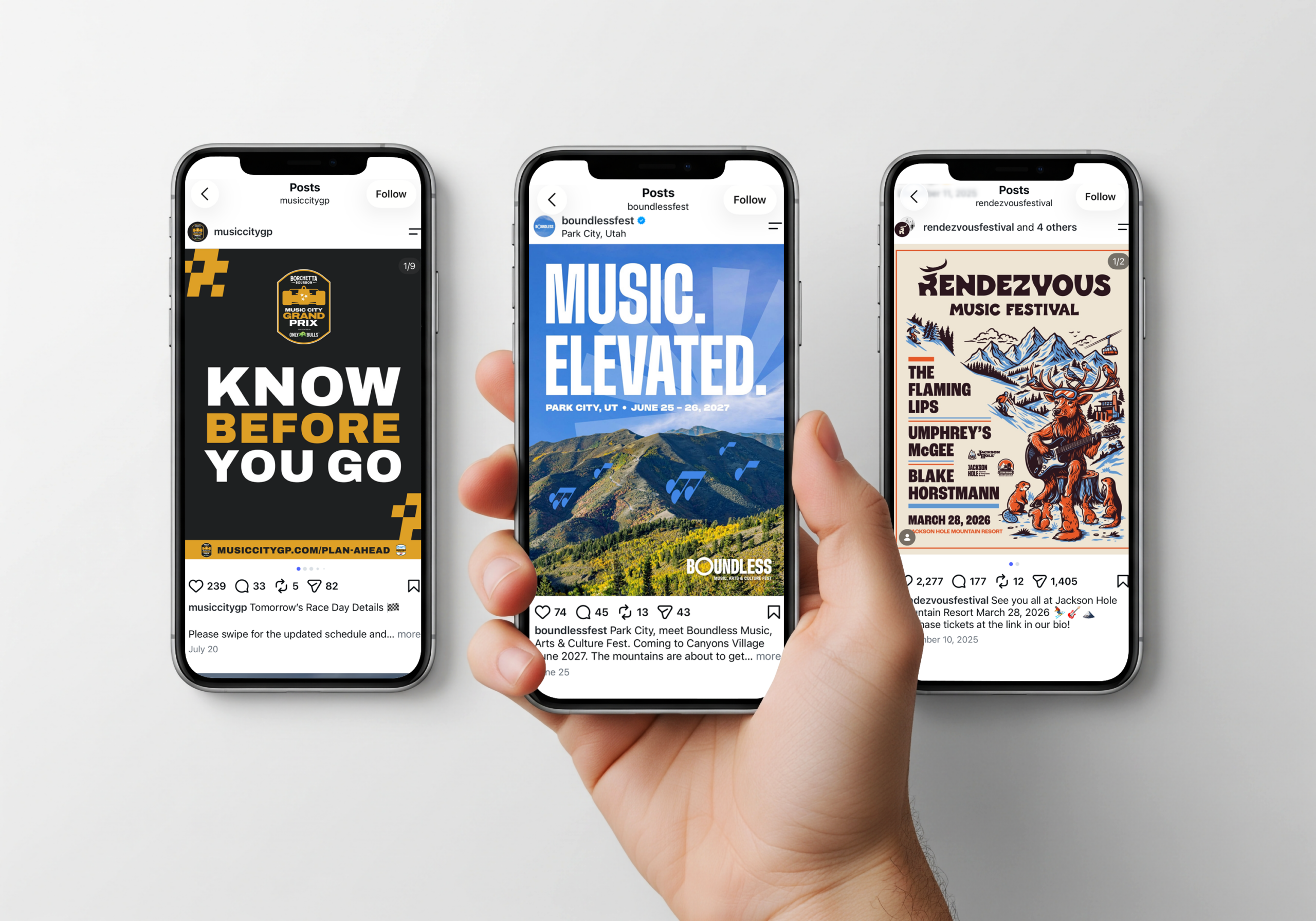
Insights | August 6, 2026
Why Live Events Need a Dedicated Social Media Team
For festivals, concerts, fan events, brand activations, and large-scale cultural moments, social media is one of the few places where the whole event comes together.
It’s where guests get excited, ask questions, check details, follow updates, share what they’re seeing, and keep the experience going after the event wraps. It’s also where sponsors, partners, talent, vendors, and event teams all need to show up clearly.
That’s a lot to ask of a content calendar.
A strong social media program for live events needs more than scheduled posts. It needs planning, production, account management, community response, and real-time communication working together. It has to feel polished and on-brand, but it also has to be useful, accurate, and ready to shift when the event does.
G7 helps event producers, venues, festivals, and partners manage social media for live events, with content strategies built around the guest experience from the first announcement through the final recap.
What does an event social media team actually do?
A dedicated event social media team turns the full timeline of an event into a clear content plan, then helps execute it as the event gets closer, goes live, and continues afterward.
In the weeks leading up to the event, that might include talent announcements, ticket reminders, countdown content, sponsor and partner spotlights, behind-the-scenes posts, travel information, parking details, and “what to know before you go” content.
During the event, the work shifts into real-time coverage and account management. The team may be capturing content, posting updates, answering common questions, monitoring comments and messages, supporting sponsor deliverables, resharing guest content, and coordinating with operations when information needs to move quickly.
After the event, social media can help extend the value of the experience. Recap posts, photo and video galleries, thank-you messages, press highlights, sponsor content, and save-the-date messaging can keep the momentum going long after guests leave.
The role is to develop and maintain a social presence that builds excitement, shares timely and useful information, supports key stakeholders, and remains flexible as event plans evolve.
Why can’t event social media be handled one post at a time?
Live events move too quickly for a reactive approach. When an account is managed post by post, content can become disconnected, repetitive, or too late to be useful.
A content calendar helps, but it’s only one part of the system. Event social media also needs creative direction, production planning, approval workflows, real-time coordination, and a clear read on what guests, sponsors, partners, and internal teams need at each moment.
A dedicated team keeps the bigger picture in view while staying close to what’s happening on the ground, which is key when the event is live.
What happens when plans change in real time?
Every live event has moving parts. Weather can roll in. Talent timing can shift. Entry lines can build. Parking routes can change. A start time, activation, performance, or guest policy may need to be updated.
In those moments, social media becomes one of the fastest ways to communicate with guests.
But urgent updates need to be handled carefully. The team has to know what information is confirmed, who needs to approve the message, what tone to use, and how to keep social updates aligned with emails, signage, on-site announcements, and staff communication.
A weather delay, postponement, schedule adjustment, or safety update can’t feel improvised, even if it’s happening quickly.
That’s why event social media management should include planning for live communication before it’s needed. Message templates, escalation paths, approval processes, and direct coordination with event operations can help the social team move quickly without creating confusion.
Great event content builds excitement. Clear event communication builds trust.
How does social media support sponsors, partners, and talent?
For many events, social media is part of how stakeholder value gets delivered.
That may include announcing partnerships, highlighting on-site activations, capturing branded moments, tagging talent and partners correctly, coordinating approved language, reposting stakeholder content, and making sure important moments don’t get missed.
This is where social media strategy can get complicated. The account has to serve the guest experience while also supporting the business behind the event.
A dedicated team can organize those needs into a content plan that feels natural, not forced. Sponsor and partner content should feel connected to the event experience, not dropped into the feed as an obligation. Talent content should be accurate, timely, and aligned with the larger event story. Vendor or venue information should be useful to guests without overwhelming the channel.
When managed well, social media becomes a place where the full event ecosystem comes together.
How G7 supports event social media management
G7 helps event producers, venues, festivals, and partners build and manage social media programs for live events.
Our team understands that event social media is part marketing, part content production, part guest communication, and part real-time response. It has to be planned in advance, but flexible enough to adapt once the event is actually happening.
Depending on the event’s needs, G7 can support:
- Social media strategy and content planning
- Editorial calendars and posting schedules
- Creative direction for event content
- Copywriting and caption development
- Photo and video content planning
- On-site content capture coordination
- Real-time posting and account management
- Community management and audience response
- Sponsor, partner, and talent content integration
- Weather, postponement, schedule change, and live update communications
- Post-event recap content and momentum planning
The goal is to make the event’s social presence feel as polished, responsive, and well-run as the experience itself.
For guests, that means a channel that’s exciting, helpful, and easy to trust. For event teams, it means dedicated support for one of the most visible and fast-moving parts of the event.
G7 helps live events show up clearly, consistently, and creatively across social media, long before gates open and long after guests leave.
—
Great events deserve great communication.
Whether you’re managing a festival, venue, fan event, or brand activation, G7 helps event teams build social media programs that engage audiences, support stakeholders, and keep guests informed from announcement to encore.